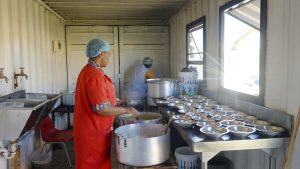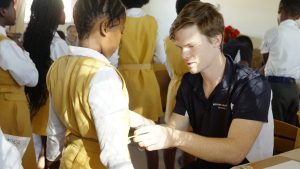
When the Siyaphakama school project was launched in 2022, health and anthropometric assessments identified underweight learners within participating schools. Since then, the programme has worked with schools and community partners to create a more supportive environment for learner health, including the provision of consistent, nutritious breakfasts, structured opportunities for physical activity, and ongoing monitoring of learners’ health and nutritional status.
In the anthropometric follow-up examinations carried out in 2025 (involving 424 learners) and again in 2026 (involving 377 learners), no underweight apprentices were identified amongst those examined. While these results cannot be attributed to a single intervention, they provide an encouraging picture of change and highlight the value of sustained, whole-school approaches to health and wellbeing. This work speaks directly to Sustainable Development Goal 3: ‘Good Health and Well-being’, which calls for healthy lives and well-being for all, while also supporting the foundations needed for learners to thrive in education.
For the Siyaphakama school project, the focus is not simply on measuring change, but on using evidence to understand what learners and schools need to guide meaningful action. Through the combined efforts of our partners, school communities, nutrition and physical activity programmes, and ongoing health monitoring, the research team is working to create healthier, more supportive school environments in communities where these opportunities are often limited.
For further information, contact Mooveshni Dumalingam (/" target="_blank" rel="noopener noreferrer">) or Dr Danielle Dolley (/" target="_blank" rel="noopener noreferrer">).